
Flood Warning
Real-time data collection, management, visualization, alerting.
Bridge Monitoring
Data collection, management, visualization, and alerting for bridge movement, stream bed level, active scour, and more.
Environmental Data Monitoring
Real-time data collection, management, visualization, alerting.
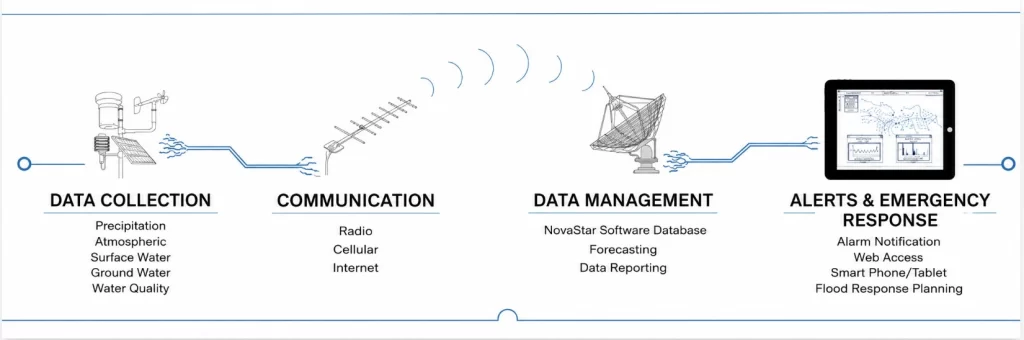
TriLynx, in conjunction with its industry partners, provides integrated real-time data collection and management solutions that can be applied for hydrologic and environmental monitoring and warning systems. The following figure illustrates a typical system configuration, with the TriLynx NovaStar base station software as its foundation. TriLynx software products are implemented to provide integrated solutions.
Data Collection
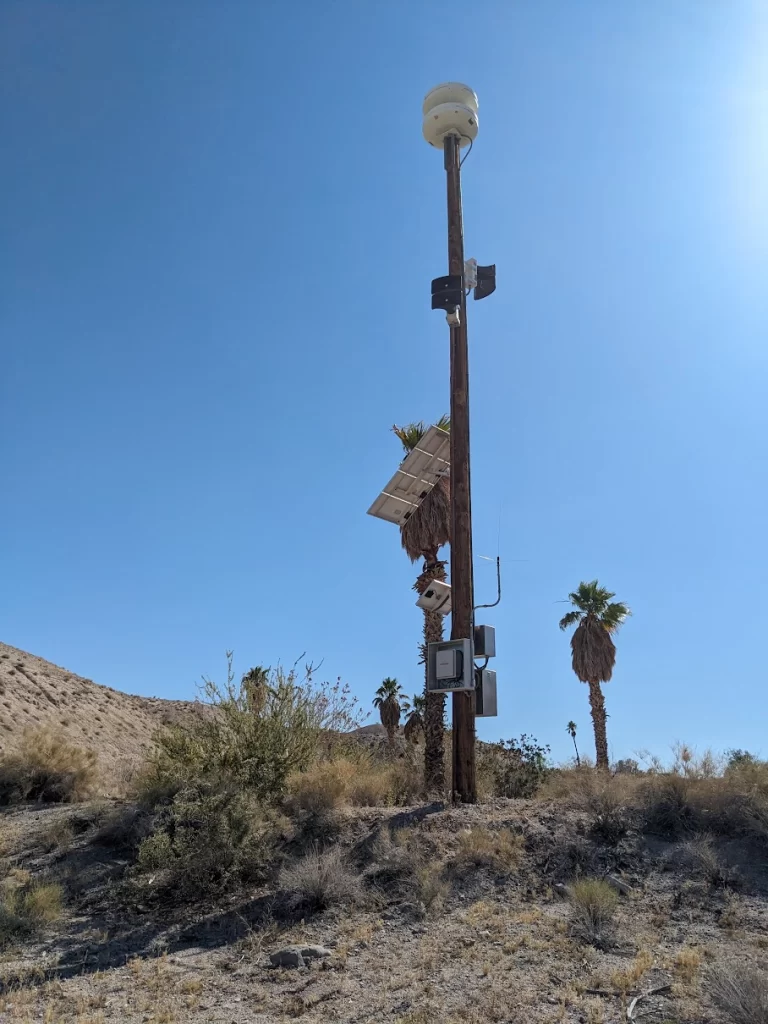
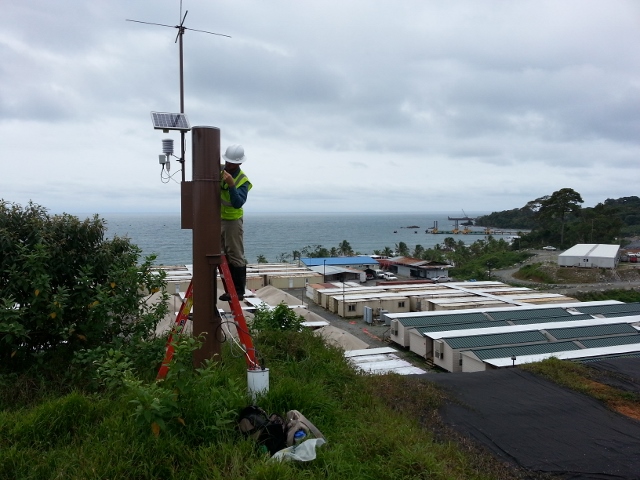
Rainfall, water level, atmospheric conditions, ground water, soil moisture, fire indices, water quality, and other data are measured in the field using an array of sensors. TriLynx teams with industry partners to provide comprehensive solutions for remote monitoring and data collection. TriLynx can provide guidance on the design and installation of remote monitoring networks that integrates sensors and technologies from a variety of manufacturers.

Communication
Sensors installed at remote stations measure and collect data that must be transmitted to the NovaStar base station. Data collected by other organizations can be queried and ingested into NovaStar via a network connection. NovaStar can ingest data from any of the following telemetry and network sources:
- ALERT/ALERT2 Radio
- USGS web services
- State Division of Water Resources web services
- ORBCOMM Satellite
- Iridium Satellite
- HughesNet Satellite
- Cellular
- Two-way communication via radio, satellite or telephone
- Network IP Serial Feed
- Comma-separated files
- Standard Hydrologic Exchange Format (SHEF) files
- Other data sources and formats
Data Management – TriLynx NovaStar Base Station
The heart of the monitoring architecture is the TriLynx NovaStar base station, which ingests real-time data from multiple sources, manages the data, and generates notifications when observations cross threshold values. NovaStar allows import of data from industry standard formats including ALERT2 decoding, SHEF, web services, etc., and if a new format needs to be supported, TriLynx can enhance NovaStar as required. NovaStar features are listed below:
- Linux operating system for security, reliability, and performance
- Data collection
- Data management
- Comprehensive data display
- Statistical analyses
- Integration with other systems using web services API
- Hydrologic forecasting with river routing and reservoir operations
NovaStar systems are implemented for reliability and redundancy:
- Automatic failover in the event one system goes down or is unavailable.
- Run on dedicated computers or on virtual machines in client’s environment or cloud.
- Implement redundant servers at physically different locations to minimize system disruptions.
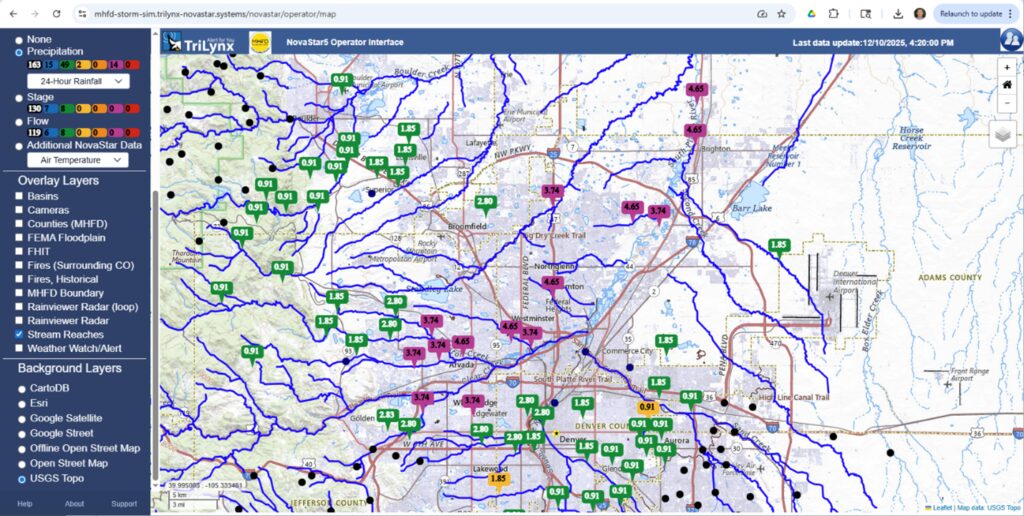 NovaStar Operator
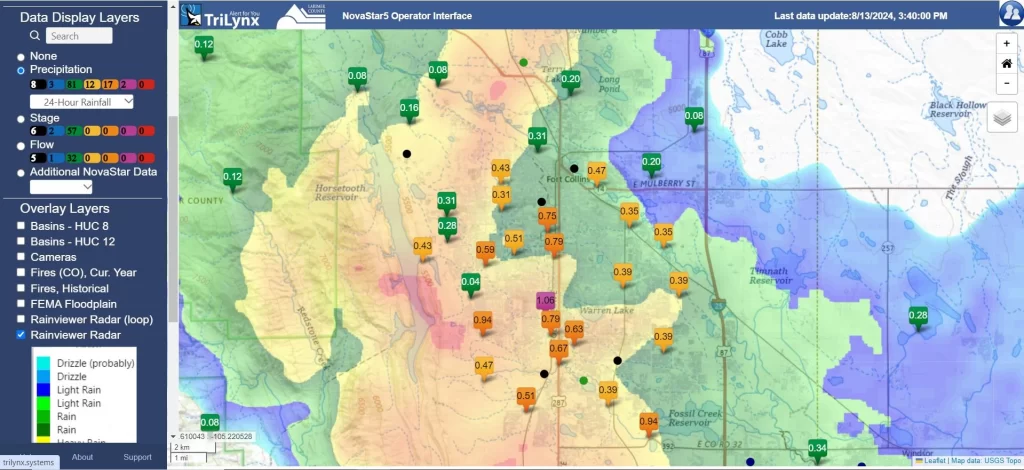 Storm with Radar and Alarms
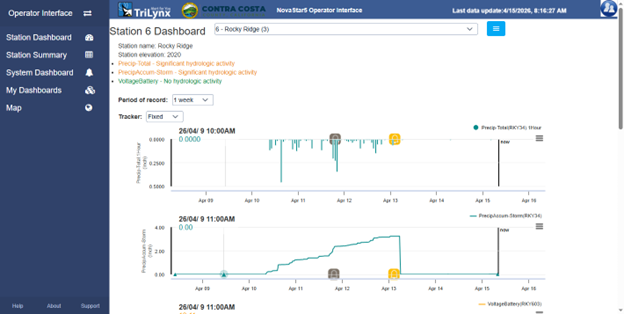 Station Dashboard with Alarms
System Integration – TriLynx NovaStar Website and Integration
The NovaStar database uses the open source PostgreSQL database. Each NovaStar system can be accessed using a web applications by system users and administrators. Data from the database can also be accessed via web services API or exported in standard formats for integration with other customer systems. TriLynx provides integration services when additional capabilities are needed.
Alerts and Emergency Response – NovaStar Notification Features & Decision Support
Data managed by NovaStar are compared in real time against alarm thresholds and when criteria are exceeded notifications can be sent by email and text messages. A radio/satellite telemetry can also be used to trigger remote sirens and/or roadway flashers.
The NovaStar system features can be configured to detect critical conditions and notify people about these conditions. TriLynx and its industry partners work with clients to define alarm triggers given site-specific characteristics and emergency response actions that will best utilize available data and NovaStar features for decision support. For example, multiple alarm thresholds can be defined to monitor conditions at roadways and critical facilities.
Additional documentation is available for specific solutions.
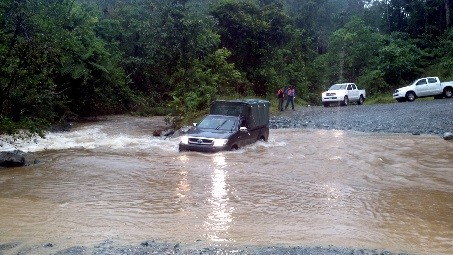 Alerts & Notification